
The short version
A family may start looking for dementia care after one frightening moment: a parent leaves the house unnoticed, stops eating regularly, or becomes distressed in a busy setting. In that moment, the best amenities for dementia support are not the flashiest features. They are the everyday details that help a person feel s
Article
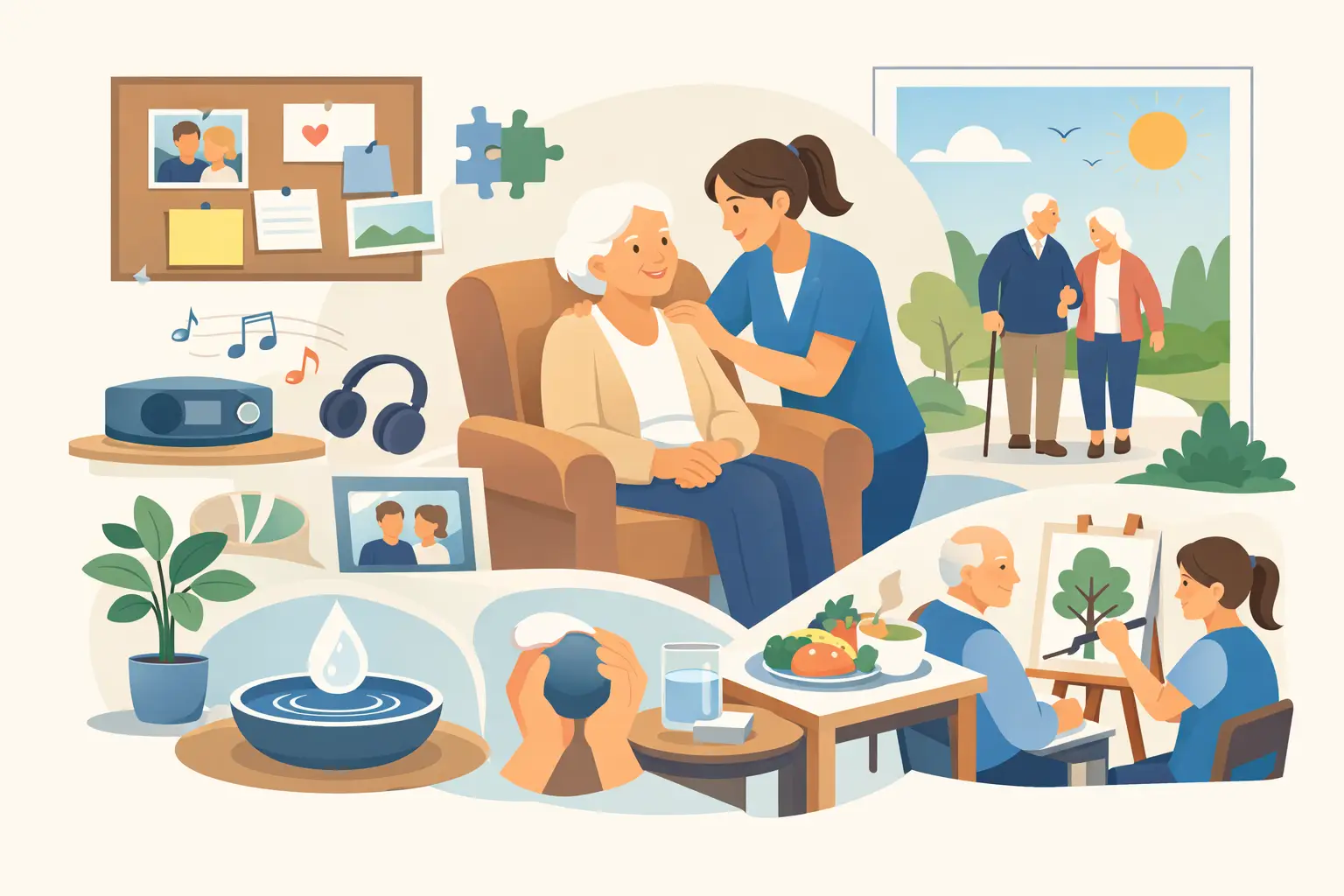
A family may start looking for dementia care after one frightening moment: a parent leaves the house unnoticed, stops eating regularly, or becomes distressed in a busy setting. In that moment, the best amenities for dementia support are not the flashiest features. They are the everyday details that help a person feel safe, recognized, comfortable, and able to follow a familiar rhythm.
Amenities matter, but they should never be evaluated separately from care. A beautiful courtyard cannot make up for limited staffing, poor communication, or a home that cannot meet someone’s mobility, behavioral, or medical needs. The practical question is: how does this feature help your family member get through an ordinary morning, afternoon, and night with less distress and more dignity?
The best amenities for dementia support reduce friction
Dementia changes how a person processes sound, light, visual cues, time, and unfamiliar surroundings. What appears minor to a visitor - a glossy floor, a dark hallway, a television playing all day - can be confusing or upsetting for a resident. The most useful environments reduce those sources of friction rather than adding stimulation for its own sake.
Clear, familiar spaces
A home-like layout can be especially helpful in a small adult family home or adult foster home. Residents may find it easier to orient themselves when the dining room, bathroom, bedroom, and common areas are close by and clearly distinguishable. Simple signs, picture cues, contrasting colors around bathroom doors, and uncluttered pathways can support independence without making the setting feel institutional.
Ask whether residents can personalize their rooms with familiar furniture, photographs, quilts, or favorite objects. Familiar belongings can make a new room feel less foreign and may give caregivers useful conversation starters. Personalization also has limits: crowded rooms and loose rugs can create fall risks, so the home should help families balance comfort with safety.
Calm lighting and manageable noise
Good lighting is a care feature, not just a design choice. Natural daylight, even lighting in hallways, and bedside lights that are easy to use can reduce shadows that may be mistaken for steps or obstacles. At night, gentle lighting on the path to the bathroom may help prevent falls and lessen disorientation.
Noise deserves the same attention. Some people enjoy music, conversation, and group activities. Others become overwhelmed by competing voices, loud televisions, alarms, or a crowded dining room. Ask when the home is typically busiest and where a resident can go for quiet time. A smaller setting is not automatically calmer, but it may offer more flexibility when someone needs a lower-stimulation space.
Safety amenities should protect without feeling restrictive
Dementia-related safety needs vary widely. A person who is physically steady but prone to wandering needs different support than someone with advanced mobility limitations or frequent nighttime confusion. Look for safety measures that match the person’s actual risks, not a generic package of features.
Secure exterior doors, enclosed outdoor areas, door alarms, and monitored exits can be appropriate for someone at risk of leaving unsafely. The key is understanding how the system works in practice. Who responds when an alarm sounds? Is the outdoor area truly accessible, shaded, and usable, or is it only visible through a locked door? Can residents safely walk without encountering stairs, uneven surfaces, or confusing dead ends?
Fall prevention also goes beyond grab bars. Well-maintained floors, handrails, accessible bathrooms, shower seating, non-slip surfaces, and furniture arranged for easy movement all matter. If your family member uses a walker, wheelchair, or transfer equipment, bring that reality into the conversation. Ask to see the route from bedroom to bathroom to dining area, rather than relying on a general assurance that the home is accessible.
Medication storage and emergency systems are also worth asking about, particularly if the person takes insulin, blood thinners, or medications that require close timing. Amenities and equipment support care, but trained staff and clear procedures are what make those systems dependable.
Outdoor access and movement can change the day
A safe outdoor space is one of the most meaningful amenities for many people living with dementia. Fresh air, daylight, gardening, birds, and a short walk can support sleep patterns, appetite, mood, and a sense of normal life. The ideal space does not have to be large. It should be secure, easy to reach, free of obvious trip hazards, and pleasant enough that residents actually use it.
Look for level walking paths, seating with shade, visible boundaries, and staff support for residents who cannot go outside alone. A patio that requires navigating several steps may not serve a person with reduced mobility. Likewise, a landscaped yard is less useful if residents rarely have the opportunity to spend time there.
Movement indoors matters too. Some homes have open common areas where residents can walk safely, stretch, join light exercise, or help with familiar tasks. For a person who paces, a safe route may be more valuable than repeated efforts to stop the behavior. The goal is not simply to keep someone busy. It is to provide a safe outlet for a real need to move.
Meaningful activity is more valuable than a full calendar
Families often ask whether a community has activities. That is a reasonable question, but the better follow-up is whether activities are adapted to the individual. A packed calendar of large group events may not help someone who dislikes crowds, has hearing loss, or can no longer follow multi-step instructions.
The strongest programs build around familiar roles and preferences. Folding towels, watering plants, listening to music from a resident’s younger years, sorting tools, baking, looking through family photos, or helping set the table can offer purpose without pressure. These are not distractions. They can preserve identity and create moments of success.
Ask how staff learn a resident’s history, routines, favorite music, faith practices, cultural preferences, and former work or hobbies. Also ask what happens when someone declines an activity. Dementia support should not force participation. A good home offers invitations, choice, and alternatives, including quiet one-to-one engagement.
Dining and personal-care amenities deserve close attention
Meals are often a major part of a resident’s day, and dining support can affect nutrition, hydration, mood, and social connection. A pleasant dining room helps, but practical details matter more: adaptive utensils, easy-to-see plates, snacks between meals, hydration reminders, texture-modified foods when needed, and staff who can provide patient cueing or hands-on assistance.
If your relative has lost weight, has swallowing concerns, or becomes distracted during meals, ask how the home handles those needs. Smaller tables or quieter mealtimes may work better than a busy dining room. Some people eat more successfully when they can choose familiar foods or sit near a caregiver who knows their usual habits.
Bathrooms and bathing arrangements are equally personal. Accessible showers, shower chairs, handheld showerheads, warm towels, and privacy features can reduce discomfort. Still, equipment alone does not make bathing easier. Ask how staff approach resistance, modesty, and preferred routines. A person who has always bathed in the evening may struggle if every bath is scheduled early in the morning for staff convenience.
How to compare dementia support amenities fairly
When comparing homes, separate what is advertised from what you can verify. A memory-care designation, secure door, activity program, or landscaped yard tells only part of the story. Use the visit to see whether features are clean, available, and integrated into residents’ daily lives.
Bring a short set of practical questions and ask them at each home:
For Washington families and those considering Portland Metro options, compare the care setting alongside verified licensing details, bed count, memory-care credentials where applicable, Medicaid acceptance, inspection information, and current availability. AFHCircle is designed to make those concrete comparisons easier while keeping control with families: you choose which homes to contact directly, without a placement agent or unwanted sales calls.
During a tour, notice what residents are doing, not only what the marketing materials promise. Are people comfortably engaged, resting in a quiet area, walking with support, or sitting for long periods without interaction? Is the home’s smell, lighting, temperature, and noise level comfortable? Trust your observations, then pair them with documented information and direct answers from the provider.
The right setting may not have every possible amenity. It should have the few that genuinely fit your relative’s needs, along with caregivers who understand how to use them with patience. A secure garden means more when someone is invited outside. A familiar meal means more when there is time to help them eat. Those small, repeated moments are where dementia support becomes real.
- How are residents supported when they are anxious, awake at night, or trying to leave?
- Can residents go outdoors, and what support is available there?
- What does a typical day look like for someone who does not enjoy group activities?
- How are meals, bathing, mobility, and medication needs handled for this person specifically?
- Which staff members are present during the busiest parts of the day and overnight?
A note on verification
This article is general education, not medical, legal, financial, or placement advice. AFHCircle combines public licensing information with provider-submitted updates. Verify licensing, availability, pricing, services, and care suitability directly with the provider and official sources.